
..these were the exact words of an orthopedic surgeon when I consulted with him about total hip replacement surgery as a treatment option for my osteoarthritis.
I have been struggling with lower back problems, hip pain, sometimes sore knees, bunions on both feet for pretty much my entire adult life. The various diagnoses I received obviously come with the territory – 46 years tied to office chairs, typing away on keyboards. Lumbago, sciatica, sacroiliac joint dysfunction, disk prolapse, skew feet, heel spurs, patella dislocation, partial tailbone fracture, and the latest: osteoarthritis of the hip. My body from the waist down is a medical war zone. Surgery had been suggested at various occasions to “fix” some of these defects. I always declined that option because it is somewhat final. Once bones have been sawed off and replaced with metal parts, you can’t go back to the previous state.
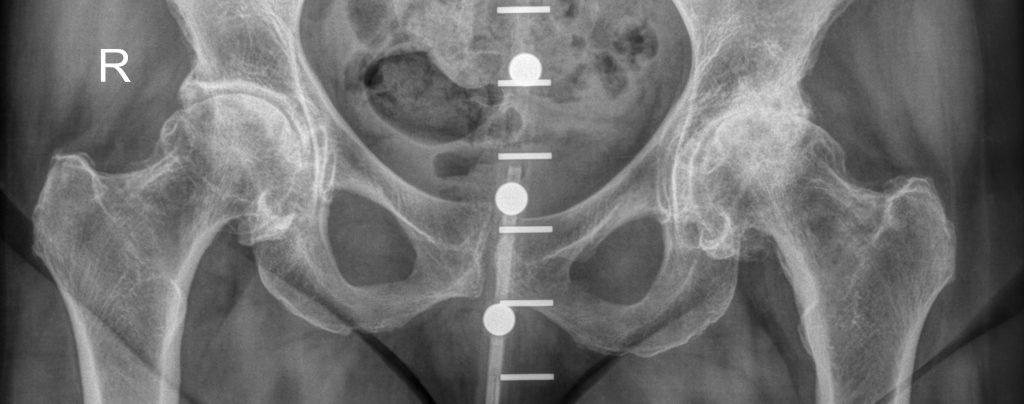
As for the surgeon looking at my recent x-rays shook his head and said “Well, as long as you can deal with the pain, there is no rush. Come see me, when you’re ready.” In the meantime we can try pain medication, different injections, physical therapy, crutches, orthopedic insoles, a hip brace…. but eventually you’re going to need surgery, because cartilage doesn’t heal. This image of my hip shows osteoarthritis on both sides, stage 4 “bone-on-bone” with osteophytes on the left, stage 2-3 on the right with potentially some iliopsoas bursitis too. Symptoms include severe pain 24/7, ongoing inflammation, major visible loss of cartilage, greatly reduced range of motion. Accompanied by my usual lower back pain and locked sacroiliac joint – my life is (no, was!) just miserable.
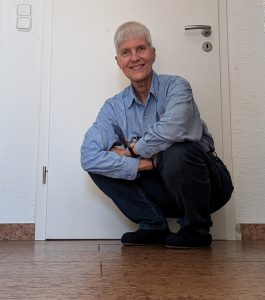 I do agree with the diagnosis – but I strongly disagree on the treatment plan. Medication, injections, and surgery, all just treat the symptoms. Physical therapy, or braces and insoles, are passive approaches that don’t address the root cause of the problem. To make a point I performed a deep squat (which I can easily get into and back out of) right there in the surgeon’s office and asked, if this was “normal”. The doctor looked a tad puzzled and then said “Perfectly normal, but not in your condition. Doesn’t that hurt?”.
So, where do we go from here? Medical professionals are highly trained specialists. They all specialize in some kind of treatment, and they mean well in most cases. They really can’t “know it all”, especially not for every single individual who presents themselves in their office. Eventually you realize, that you can listen closely to all of them, and combine the bits and pieces of valuable information they all give you (sometimes unknowingly) at one point during the conversation. You personally have to use your own best judgement, though, when it comes to healing (yes, healing, not just treating) your ailments.
If you’re still reading at this point, I’ll give you the current state of my own (non-scientific) research. Be warned, though – I’m not qualified to give any advice. Don’t rely on anything I say, I don’t claim to know better than any doctors, surgeons, physical therapists, osteopaths, chiropractors – or even magic witches.
I believe that the symptoms of osteoarthritis – the wearing down of cartilage, the inflammation and pain, the loss of mobility – are not caused by “normal ageing”, or “overworking” the joint. I am certain (at least in my personal case) that the damage in my lower back and hips was caused by decades of muscle imbalance, muscle weakness, muscle atrophy and “rubbing it wrong” somewhere deep inside by doing too much of the wrong kind of movements and not enough of the right kind. I am also certain that cartilage – like most cells in the human body – is constantly being worn off on the top and built back from the bottom, as long as there are chondrocytes hiding somewhere in the matrix.
Here’s what I am doing (and have done in the past two months) to heal myself, get back to a painfree, active life and avoid surgery.
Immediate action (for two or three weeks) to stop the constant pain and get rid of inflammation:
Take the maximum allowed dose of some NSAID (like Ibuprofene) for two weeks.
Lie down and put icepacks on the affected joint two or three times a day for about 20 minutes each time.
Ongoing, start as soon as you can:
Take as much load off of the joint as possible by walking with crutches or a walker, and minimize walking at least for the first two or three months.
Take even more load off of the joint by losing weight. One pound down on the scale takes four pounds of pressure off the hip with every step.
Lifelong habits that actually address the cause of osteoarthritis:
Make sure your body has all the tools needed to fight inflammation, heal and regrow cartilage, and maintain muscle mass while eliminating excess body fat.
Proper nutrition for me means plenty of plant-based food, avoiding highly-processed products. Adding some supplements like vitamin D, vitamin C, magnesium.
Intermittent fasting gives the body 16 hours of time to do repairs every day.
Get plenty of sleep.
Hydrate well – drink at least 80 oz. of clean water every day.
Find the right exercises to heal specific muscle imbalances.
Always listen to your body. If it hurts, stop doing it.